The healthy fat that makes you thin
MCT (medium-chain triglyceride) oil has become one of the most talked-about dietary supplements, promoted across websites, podcasts, and health forums as a "fat-burning" solution.
The idea sound appealing: a type of fat that can help reduce body weight, boost metabolism, and suppress appetite. Some studies suggest that MCTs can increase satiety, improve glucose control, and reduce inflammation, key factors in obesity and type 2 diabetes.
But there's a problem.
Not all of the claims are backed by solid science. MCT oil is high in saturated fat, which people with metablic disease are often advised to liit. It long-lasting effects are still unclear, and different MCT products vary widely in composition, meaning they may not all have the same biological effects.
In this project, we go beyond headlines.
We investigate how MCT oil, and its individual components, affects appetite, metabolism, and whole-body physiology. By uncovering the underlying mechanisms, we aim to provide evidence-based answers to a simple question: Is MCT oil genuinely beneficial, or just another health trend?
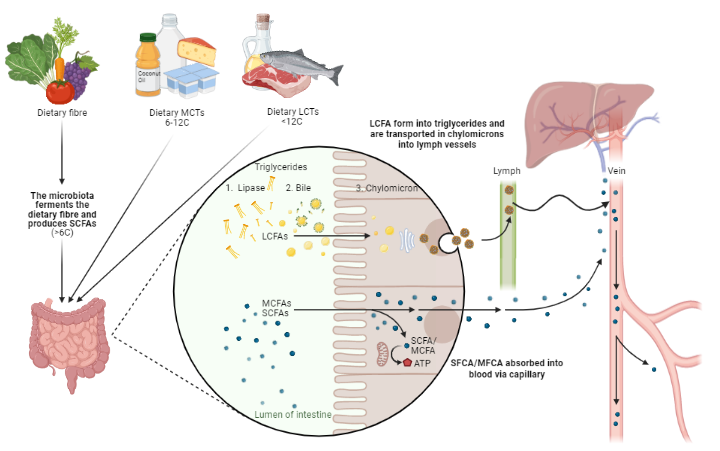
This figure illustrates how different types of fatty acids are processed in the body. Long-chain fatty acids are digested with bile acids and transported via the lymphatic system. Medium-chain fatty acids are absorbed directly and rapidly transported to the liver.
Short-chain fatty acids are produced from dietary fibre in the gut and mainly fuel colon cells.